



Hair Loss After a Scalp Biopsy: How to Cover a Shaved Area With a Wig or Hair Topper
This article explains how to cover a shaved area or noticeable hair loss after a scalp biopsy using a wig or hair topper. It explores when a hair topper may provide suitable coverage, when a full wig could be easier to wear, and how the location of the affected area, surrounding hair and personal preferences influence the choice. It also covers scalp biopsy healing, temporary hair loss solutions and the importance of allowing the biopsy site to heal before wearing a hairpiece. For women looking for support, it explains how a private wig and hair topper consultation at The Roche Hair Experience in Stafford can help them explore comfortable, natural-looking coverage options.
Hair Loss After a Scalp Biopsy
Finding It Hard to Disguise the Shaved Area After Your Scalp Biopsy? Here’s How a Wig or Hair Topper Will Help
A scalp biopsy can leave you with a very visible reminder of something you would probably rather not have to think about every time you look in the mirror.
A section of hair has been clipped or shaved around the biopsy site, leaving an area that is much more visible than the hair around it.
You get the area covered when your hair is sitting exactly where you want it, then your hair moves and it shows again.
You catch sight of the area from above.
You start thinking about how it will look at work, when you go out or when somebody stands behind you.
And then comes the question:
Would a hair topper or a full wig work better for covering this area?
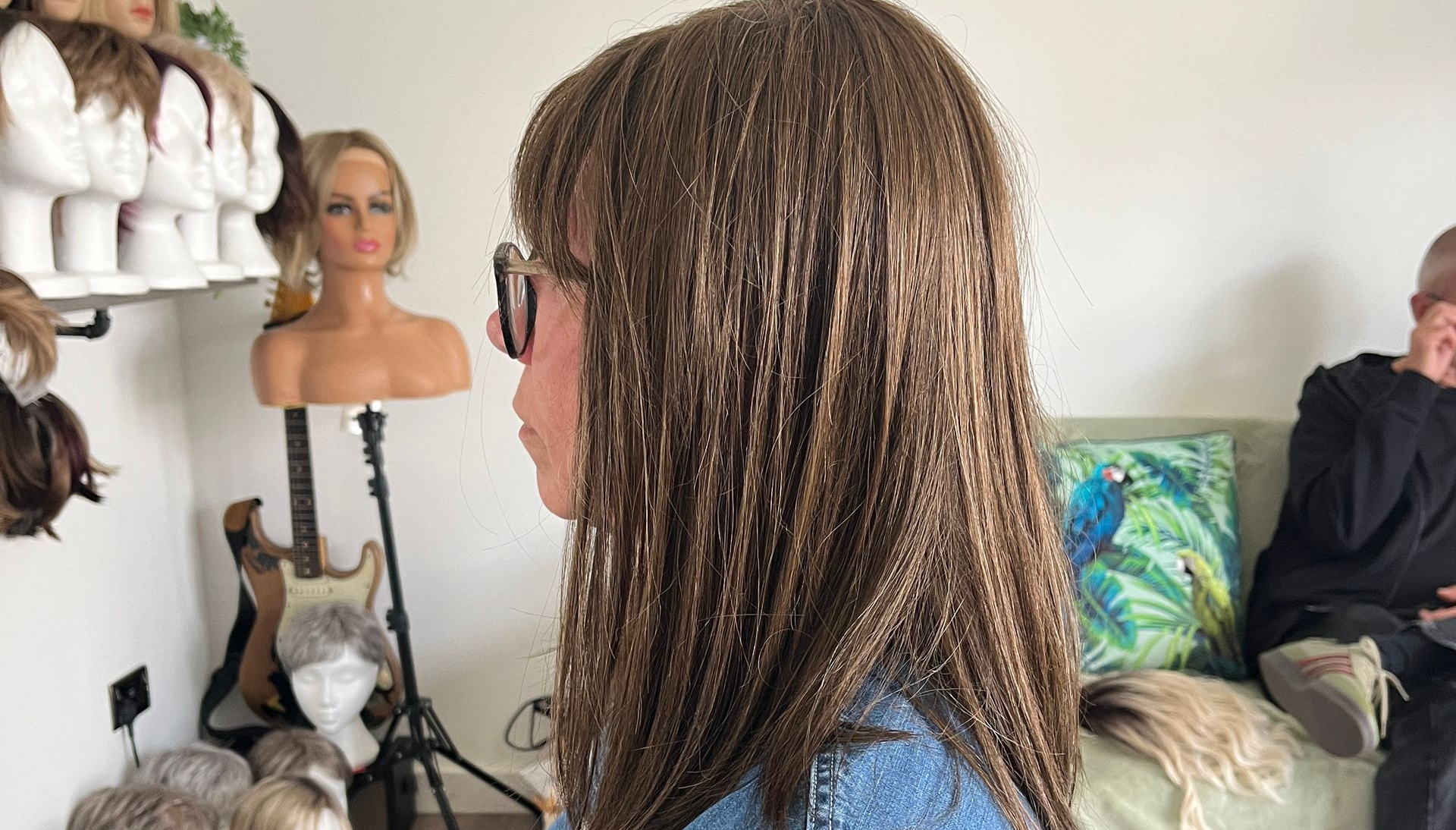
There are two main options to explore: a hair topper or a full wig.
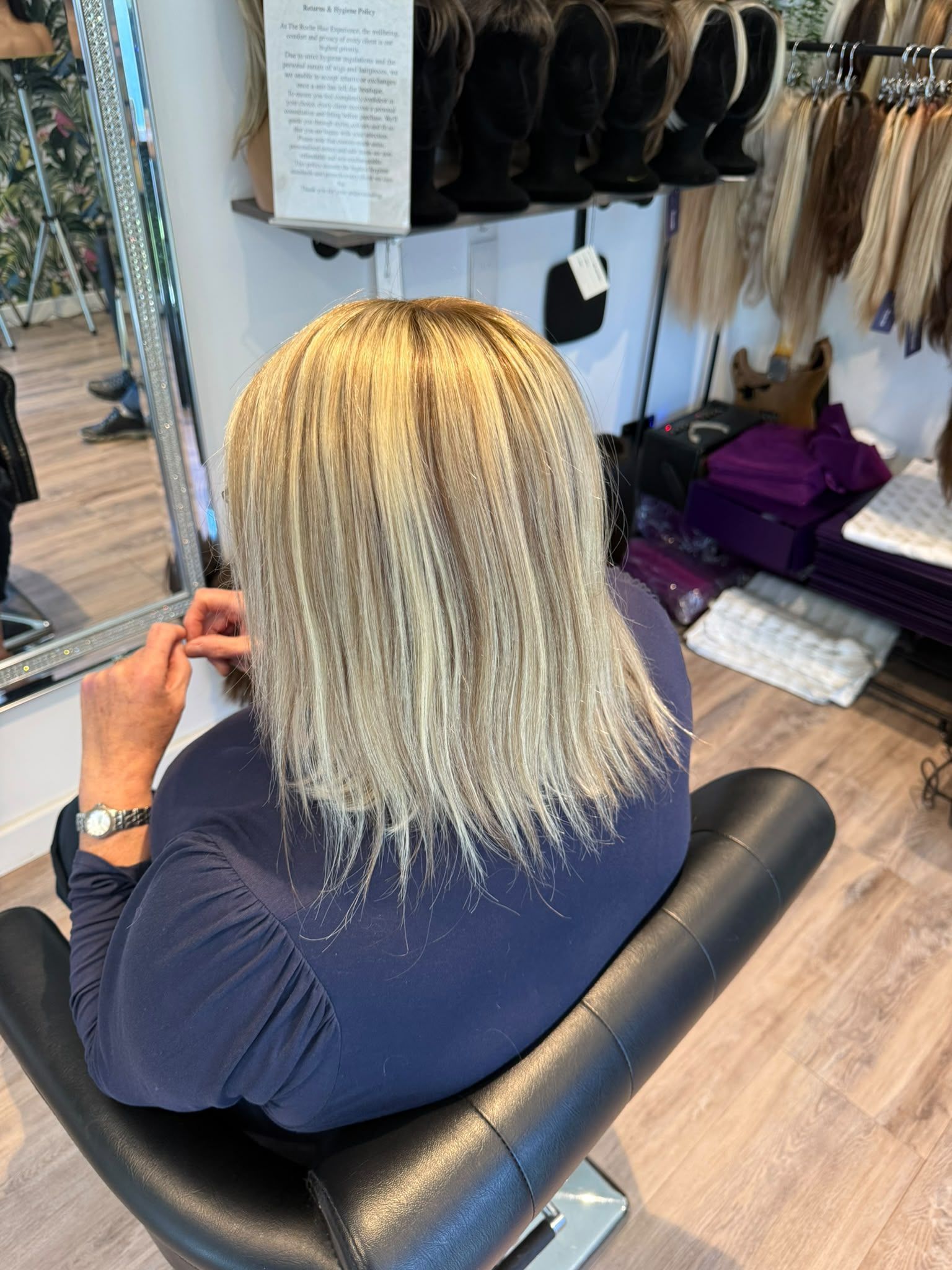
A hair topper can provide more focused coverage while allowing much of your own hair to remain visible.
For other women, a lightweight wig can feel simpler because it creates one complete hairstyle without having to arrange or blend your natural hair around the shaved area each morning.
A topper keeps more of your own hair visible and focuses coverage around the affected area.
A full wig gives you one complete style without needing to blend around it.
The right choice depends on the position of the shaved area, the hair around it and which option feels easiest for you to wear.


Hair Toppers After a Scalp Biopsy
Cover One Noticeable Area While Keeping the Rest of Your Own Hair Looking Familiar
If the shaved area is relatively focused and there is suitable natural hair around it, a hair topper gives you targeted coverage without replacing your whole hairstyle.
That can be appealing if your first thought is:
“I only want to cover this patch. I still want the rest of my hair to look like mine.”
The topper can be blended into your natural hair so the finished result adds coverage and fullness where you want it while leaving much of your existing hairstyle visible.
The location of the shaved area is important, though.
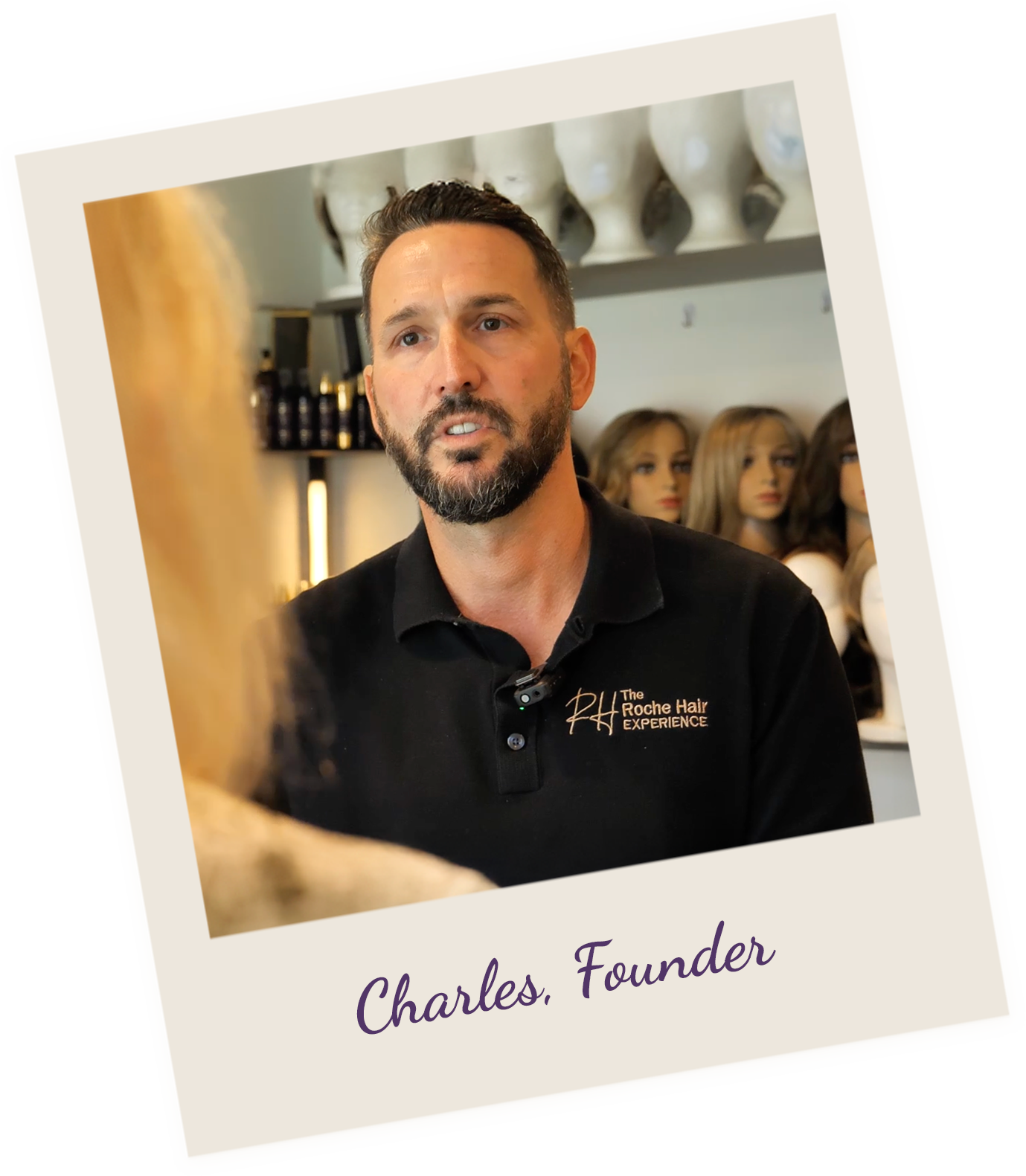
Charles will look at where the topper would sit, where it could attach, how much natural hair is available around it and whether the colour, texture and fullness can be blended naturally with your own hair.
Weight and comfort matter too.
A topper should give you the coverage you want without feeling unnecessarily heavy or making you more aware of your scalp throughout the day.
The goal is not simply to hide the patch while you are standing perfectly still in front of a mirror.
It should still feel right when you turn your head, move your hair and get on with an ordinary day.
Readers also enjoy: Do I Need a Wig or a Hair Topper? How to Choose the Right Hair Loss Solution
Choosing a Wig After a Scalp Biopsy
Choose a Complete Style If Blending Around the Shaved Area Would Give You More Work Rather Than Less
A full wig can be the easier option when a topper would be difficult to position or blend.
The position of the shaved area can make targeted coverage harder to blend.
You may already have some thinning around the parting, crown or sides, or you may simply prefer not to work your own hair around a separate piece every morning.
A lightweight full wig gives you one complete hairstyle instead.
That does not mean your hair loss has to be extensive, and it does not turn the choice into a permanent decision.
For some women, a wig after a scalp biopsy is simply a practical way to have dependable coverage during recovery.
The result can still feel familiar.
Colour, parting, length, shape and how full the hair appears all influence whether you look in the mirror and recognise the style as something you would actually choose for yourself.
If you are used to finer hair, for example, a very full wig may feel unfamiliar even if the wig itself is beautiful.
Fit matters in the same way. The cap should feel comfortable on your head and the overall result should make getting ready easier, not replace one thing you are conscious of with another.
Wig or Hair Topper After a Scalp Biopsy?
Find the Amount of Coverage That Makes the Shaved Area Easier to Forget About Rather Than Something You Keep Checking
A hair topper and a full wig can both cover the shaved area, but they do it in different ways.
What matters is where the shaved area sits, how much of your natural hair you want to keep visible and what would make your normal routine easiest.
| Does this sound like you? | Coverage option | How a consultation with us helps |
|---|---|---|
| You can cover the shaved patch when your hair is sitting just right, but it starts showing again as soon as your hair moves. | Hair topper or wig | See whether a topper gives you reliable enough coverage or whether one complete style would mean less arranging and checking throughout the day. |
| The shaved area is mainly around the crown, parting or top of your head, and you want to keep as much of your own hair visible as possible. | Hair topper | Charles can look at the size and position of the area, where a topper could attach and what colour, texture and fullness will blend naturally with your own hair. |
| You are worried a topper will look separate from your own hair or make the area more noticeable rather than less. | Hair topper | Try suitable toppers against your own hair and see how the base, colour and amount of hair look once the piece is actually in place. |
| You already had some thinning around the biopsy area, so there is less hair available for a topper to blend into or attach to. | Hair topper or wig | The hair around the area can be assessed to see whether targeted coverage will work well or whether a full wig would give you an easier result. |
| You would rather put on one finished hairstyle in the morning than position a topper and blend your own hair around it. | Full wig | Try lightweight wigs with different levels of fullness, shapes and colours so complete coverage still feels familiar rather than like too much hair. |
A full wig gives you more coverage and one complete style.
A topper keeps more of your own hair visible but needs suitable hair around the area to sit and blend well.
A more useful question is:
Which option gives you the coverage you want with the least amount of thinking about it?
Seeing both on your own head can make that much easier to answer.

Temporary Hair Loss Solutions After a Scalp Biopsy
Use a Wig or Hair Topper for the Period You Need It Without Feeling You Are Making a Permanent Decision
For many women in this situation, that word matters:
Temporary.
If hair around the biopsy site has been clipped or shaved for the procedure, the surrounding hair may grow back over time.
The small area where the biopsy was taken may behave differently from the surrounding shaved hair, so questions about regrowth there are best answered by your dermatologist or consultant.
But choosing a wig or topper now does not mean deciding how you will wear your hair forever.
It can give you a way to feel more like yourself while the shaved area changes, your hair grows around it or you wait to see what happens next.
What works for you now may change a few months down the line, and that is okay.
The important thing is finding something that helps while you are going through this stage.

Scalp Biopsy Recovery
Your Scalp Needs Time to Heal, but You Can Start Exploring Your Coverage Options Now
The biopsy site needs time to heal before a wig or topper is worn over or close to it.
Follow the advice from your consultant, dermatologist or healthcare team about wound care and when the area is sufficiently healed.
You do not need to wait until then to start thinking about your hair.
You can explore wigs and toppers, look at the coverage you want and begin working out which option suits the position of the shaved area.
If you choose to arrange a consultation, the options can be discussed while the area is healing so you have a clearer idea of what comes next once your scalp is ready.

Trusted Wig and Hair Topper Support With 300+ Hair Transformations
Talk to Someone Who Has Already Helped Women Find Coverage After a Scalp Biopsy and Can Help You Work Out What Feels Right on You
Charles has already helped women who have come to The Roche Hair Experience after a scalp biopsy, so you will not be the first person to sit down with him and say, “I’m not really sure what I need, I just know I want this area to feel less noticeable.”
During your private, one-to-one consultation in Stafford, you can show him the area, talk through what has changed and explain what is bothering you most about your hair at the moment.
From there, you can look at the options together and work out which type of coverage makes the most sense for the area.
That could mean trying a topper to see whether targeted coverage is enough, or putting on a lightweight wig to see how a complete style feels.
You can compare different levels of fullness, colours and styles against your own features rather than trying to picture the result from photographs.
And there is no pressure to choose anything on the day.
You can take your time, ask questions, try different options and simply get a better idea of what feels right for you.
For some women, a topper gives them exactly the coverage they were hoping for. For others, a full wig feels easier the moment they try it on.

Scalp Biopsy Hair Loss FAQs
The Questions Women Often Ask When They Are Waiting for a Scalp Biopsy Site to Heal and Wondering How They Can Cover the Shaved Area
How long does a scalp biopsy take to heal?
A scalp biopsy can take a couple of weeks or longer to heal, depending on the procedure, whether stitches were used and how your individual scalp responds.
Your dermatologist or healthcare team should always guide you on wound care and when the area is ready for anything to sit over or close to it.
Once you have been advised that the site has healed sufficiently, Charles can help you look at comfortable wig or topper options for the coverage you want.
Does a scalp biopsy leave a scar or bald spot?
A scalp biopsy usually leaves a small scar where the sample was taken, while hair that was clipped or shaved around the area may grow back over time.
What happens to the hair within or around the biopsy site can also depend on the condition being investigated, so questions about regrowth are best discussed with your dermatologist.
If the visible area is bothering you in the meantime, Charles can show you how different levels of coverage look against your own hair rather than asking you to guess what you might need.
Do hair toppers damage your natural hair?
A properly chosen and fitted hair topper should work with your natural hair rather than place unnecessary strain on it.
Where the topper attaches matters, particularly after a scalp biopsy, because the clips need suitable hair and should not rely on a recently healed area.
During your consultation, Charles can look at where the piece would sit and whether a topper can give you the coverage you want without asking too much of the surrounding hair.
How do hair toppers stay in place?
Many hair toppers use small built-in clips that attach to suitable natural hair around the area being covered.
The base size, position and clip placement all affect how secure and comfortable the topper feels, so the same piece will not work equally well for every pattern of hair loss.
Charles can fit and position suitable toppers on your own head so you can see how they feel when you move, turn your head and wear your hair normally.
How do wigs stay on?
A well-fitted wig should sit securely because the cap has been chosen and adjusted for your head, rather than because it has simply been made very tight.
Depending on the wig and the person wearing it, different fitting features or accessories may also help with security.
Charles will take the time to check the fit during your private consultation so you can move naturally and see how the wig feels before deciding whether it is right for you.
Wig and Hair Topper Consultations in Stafford
Find a Comfortable Way to Cover the Shaved Area While Your Scalp Recovers and Your Hair Begins to Feel More Familiar Again
Reading about wigs and hair toppers can help you understand the difference, but trying them on can make the decision feel much easier.
During a private, one-to-one consultation in Stafford, Charles will take the time to look at the area with you, understand what you would like to cover and show you suitable options for the hair and coverage you have now.
You can try a topper, try a wig, ask questions and see how different levels of coverage actually feel on you.
You can take your time with it.
Try a few options, see how they feel and go away with a much better idea of which type of coverage feels right for you.
Sometimes that is a topper.
Sometimes a wig feels easier.
Either way, you are not being pushed into making a decision before you are ready.
If you would like some help choosing between a wig and hair topper, book your private consultation at The Roche Hair Experience in Stafford.
Ready to Regain Your Confidence & Feel Like Yourself Again?
Explore our range of premium human hair wigs in a private, supportive setting where you can try different styles, ask questions, and find the look that feels right for you.
Recent Posts